News

What foods are toxic for dogs?
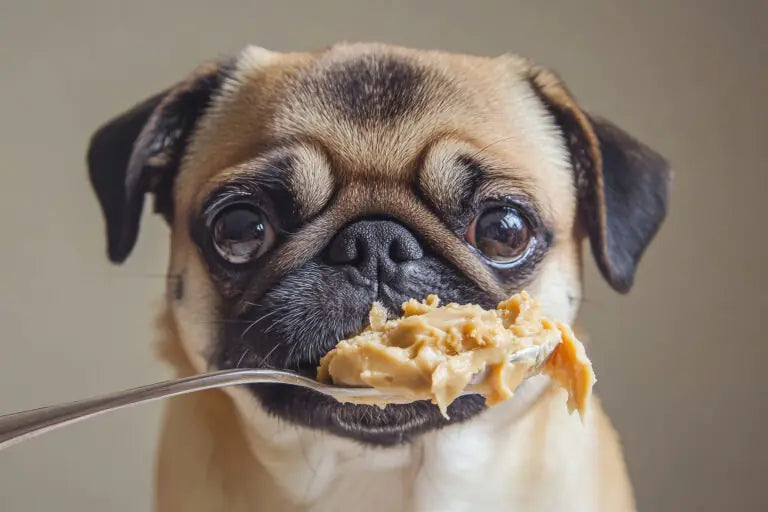
Dogs are usually the master of the house, but they can also be master gluttons. Dogs have nearly double the taste buds as humans, and they use them constantly. This means that you need to watch what your dog is eating very carefully to make sure that your four-legged friend is getting good foods and avoiding the bad. Certain foods are toxic for dogs and might cause problems like vomiting, diarrhoea or even pancreatitis. Today we aim to give you a quick list of these toxic foods for dogs and tell you how you can prevent your dog from getting their teeth into them! As dog health advocates ourselves, we feel it is important to only provide you with the most reliable sources of information. We have therefore teamed up with a dog health expert and qualified vet; Dr. Michael, to get his advice on foods for your dogs to avoid. “There are several foods and human medications that are toxic to dogs, and some can even be fatal. Familiarise yourself with some of the most common toxicities vets see in dogs and make an effort to keep them far away from your dog to ensure they stay healthy and happy. Many people know chocolate is off limits; in fact, the darker, the more dangerous. However, but other household regulars such as caffeine, grapes, raisins, sultanas, and even onions and garlic, need to be kept safely out of reach”. Why is chocolate bad for dogs? Chocolate is a hugely popular and widely loved treat for us humans. Most dog owners know to avoid giving their dogs chocolate, but a lot of pet parents don’t understand why. If chocolate is so tasty for us humans, how can it be such a toxic food for dogs? Chocolate contains a substance which is classed in the “toxic foods for dogs” because they cannot metabolise it. A dog’s liver can only metabolise certain chemicals while others are stored as fat and harm the internal organs. Theobromine (which is a bit like caffeine) is just one of these life-threatening chemicals. Dogs are not immune to this stimulant in the same way that people are, and as dogs process it much more slowly it builds up to toxic levels within their bodies. Too much theobromine can cause restlessness, rapid breathing, seizures, heart attacks and even death. Why are grapes bad for dogs? It is widely known that grapes are toxic for dogs, but many people know little about the damage caused by them. The fact remains that there is limited research around the exact cause of the toxicity in grapes that affect dogs so badly, or how many grapes would need to be consumed to poison the dog. It is therefore always advised to avoid grapes, raisins (which are dried grapes) and sultanas at all costs when it comes to your canine companion. Symptoms of grape toxicity Unfortunately, new scents are enticing to dogs. If you’re eating grapes or raisins, your pup may be nearby hoping you drop one on the floor, but ingesting just one grape or raisin, could lead to your dog exhibiting any of the following symptoms:Decreased appetiteLethargy or weaknessVomiting and/or diarrhoea within a few hours of ingestionTenderness in abdomenDehydrationIncreased thirst and urine productionDecreased or no urine production Cooking ingredients which are toxic for dogs Many paw parents leave their leftovers for dogs, or even cook them up their own plate (or bowl) when home cooking for the family. This is great and many dogs do benefit from a fresh diet. But owners still need to be mindful of what they are putting in their dishes. Anything outside the realms of fresh chicken, rice and vegetables should be considered with care.Common, everyday ingredients such as onions, garlic and chives can be highly toxic for dogs and should be avoided in their meals at all costs. All of these ingredients can p cause gastrointestinal irritation and could lead to red blood cell damage and anaemia. Go easy on milk and dairy for dogs While it may seem crazy that dogs can react badly to milk, considering they would drink it from their mother as a pup, there is a strong difference between the two. Milk made for human consumption is processed differently to that provided by mummy dog. Very small amounts of milk is unlikely to harm your dog, but larger amounts, or dogs which are lactose intolerant (which is very common), could lead to reactions to the milk. These reactions can include diarrhoea, vomiting, and loose stools. The complete A-Z of toxic foods for dogs Almonds Almonds contain high amounts of oils and fats, and dogs cannot digest them as easily as humans can. The fats can cause vomiting and diarrhoea, and potentially pancreatitis in pets. Alcohol It goes without saying that alcohol, in any form, is toxic for dogs and can have very serious consequences, even leading to death. Apple seeds While apples themselves are a completely safe, healthy and refreshing reward for your dog, be sure to chop them up first into slices that your dog can easily manage. Not only will it decrease the risk of your pup choking, but it gives you the opportunity to dispose of the cyanide containing seeds! According to research, the cyanide in apple seeds isn’t believed to be a danger in just one apple, but the poison accumulates over longer periods of exposure, so it is regarded as being best to avoid them. Apricot pits Chocolate, coffee and anything else containing caffeine All of these substances contain methylxanthines; this is one of the killer ingredients which can be highly dangerous of your fur baby. Citrus Depending on the type of fruit or seed, citrus plants contain high levels of citric acid. While you might consider fruit as a healthy treat for your dog, be mindful that citric acid cannot be broken down in your dog’s system in the same way as in a human’s, and therefore can cause irritation and stomach upset. Chives Garlic Grapes Macadamia nuts Macadamia nuts contain high amounts of oils and fats. The fats can cause vomiting and diarrhoea, and potentially pancreatitis in pets. Mushroom plants While mushrooms purchased from a store for human consumption are not dangerous to dogs, dogs will react badly, in the same way as humans, to poisonous wild mushrooms. Mushroom plants found in the garden or while out on walks should be avoided to ensure your pup doesn’t ingest something nasty! Mustard seeds Onions Pecans Pecans contain high amounts of oils and fats. The fats can cause vomiting and diarrhoea, and potentially pancreatitis in pets. Rhubarb leaves Rhubarb leaves are considered inedible due to their high concentration of oxalic acid. They are highly dangerous for both dogs and humans. While the plant of the rhubarb is totally safe for both, try to discourage your dog for chewing on leaves while out and about, just to be on the safe side. Raw eggs As with humans, eating raw eggs or undercooked eggs bares the risk of food poisoning from bacteria like Salmonella. Salty foods Large amounts of salt can produce excessive thirst and urination, or even sodium ion poisoning in pets. Xylitol Xylitol is used as a sweetener in many products. It is commonly found in peanut butter, which is a form of dog reward. When purchasing peanut butter for your dog, it is always recommended to buy ones specifically marketed at the pet sector – these will be Xylitol free. Walnuts Walnuts contain high amounts of oils and fats. Black walnuts especially should be avoided as these are toxic to dogs, and can cause vomiting and diarrhoea, and potentially pancreatitis in pets. Top tips to help dogs avoid toxic foods While your home is teeming with foods safe for you, not all should be consumed by your canine companion. To keep matters safe, especially when you’re out of the house, keep leftovers out of reach, preferably in a fridge, or other containers which your dog cannot access. Store cooking ingredients, such as onions and garlic, out of reach too, in above counter cupboards, instead of those where a nosey dog is likely to poke their head into! Be vigilant. If you are allowing your dog to experience new foods, always try in small doses, even if it is a food item which is deemed as “safe”. Many dogs are unknowingly intolerant to a number of ingredients and even the most gentle or natural of foods could cause issues for your dog’s tummy. Always check with your vet or pet nutritionists first before introducing new ingredients you are not sure about. Expert Dog Tips with Vet Michael Lazaris
Learn more
When to Stop Soaking Dry Food for Puppies?
Alongside the all important question, “when to stop soaking dry food for puppies”, it is important to know what to be feeding your puppy, dependant on their age, breed or weight. Here at Laughing Dog we feel it is important to educate fur-baby owners on the healthiest ways to feed their growing pooch to ensure they reach their full potential of being that strong, sociable and loving pooch. When to stop soaking dry food for puppies? It is recommended that puppy food is soaked from the age of 3-4 weeks up to 12 weeks. However there is no set rule for this, some puppies or even older dogs will always prefer to eat dry food when soaked and it is providing your puppy or dog with more water intake, so certainly nothing wrong with that! Be sure to use warm or hot water to moisten the dry food, the idea is to make it softer for developing teeth! But always allow time to cool before providing the food to your puppy. How to soak dry food for puppies? As puppies from the age of 3-4 weeks will be transitioning to soaked dry puppy foods, they are still very tiny at this point so make sure the food is accessible, without them having to climb over high rimmed bowls. Many puppy owners use a flat surface or plate to place the dry food on, pour warm water over it and soak for 10-15 minutes. Give it a quick mix, check the temperature is okay then place on the floor for the puppy to access. How long should puppy food be soaked? It usually takes 10-15 minutes to soak puppy food enough for it to loosen and soften. This makes it easier for young puppies to chew as they are only just developing their teeth. Make sure if you have used hot water that it is cool enough to give to your puppy – this might take longer than 10-15 minutes. How much food should I give my puppy? An individual dog’s requirements may differ from food to food. Always check the labelling for helpful guides based on dog’s age or weight. Introduce Laughing Dog puppy complete food at around 6 weeks of age and continue feeding until your puppy reaches adult age. At this stage, a change to Laughing Dog adult complete is recommended. It is advisable to soak dry food for puppies under 12 weeks of age. When introducing Laughing Dog, do so gradually over a period of 7 days, increasing the proportion of food each day. How often should I be feeding my puppy? It is recommended to feed your puppy four meals a day up until the age of 4 months (16-weeks), and then reduce their feed to three meals a day until they are 6 months old. They can then move to two meals a day, and stay on this routine for the rest of their life. What should I be feeding my puppy? Most puppy owners don’t take their bundles of joy home with them until 8-weeks of age at the earliest. Puppies should not be removed from their mother and the rest of their litter until around 7 weeks, so if you’re buying a puppy that is being rehomed before this time, alarm bells should be ringing! If you are a breeder, however, it is important to know the stages a puppy goes through in those very early weeks, to ensure they get the right nutrients from the off. What to feed a puppy aged 0-3 weeks A puppy aged 0-3 weeks will be living from their mum’s teat, generally eating every 2-4 hours, some puppies do require more encouragement than others, but they soon get the taste for it! What to feed a puppy aged 3-4 weeks From the age of 3-4 weeks the weaning process starts, at this point small introductions to puppy food is welcome, however, it should be noted that at this stage puppies have only just started teething and it can take them up to the age of 6 weeks to have developed their teeth. Therefore, we would always recommend soaking dry food for puppies in warm or hot water from the age of 3 to 4 weeks to help them eat it easier. It also helps provide your fur babies with essential water as at this stage they often don’t drink enough on their own accord. What to feed a puppy aged 6 weeks From the age of 6 weeks your puppy should be able to eat solid foods, many owners still choose to soak their food at this time and puppies who have just developed their teeth will welcome the softness! What to feed a puppy aged 8-12 weeks As a new puppy owner, collecting your newbie at around 8-12 weeks of age, your fur-baby should be well customed to eating a certain type of puppy food from the breeder. It is always recommended to initially keep them on this same type of food when you first get them home and gradually wean them onto your own choice. Laughing Dog offers their highly recommended Grain Free Puppy Complete Chicken, carefully formulated to provide your puppy with all of the essential nutrients to grow up big and strong. A puppy grows around 20 times faster than an adult dog and they, therefore, require regular feeding and the right ingredients to go onto live a full and happy life. “Very fast delivery and puppy loves this food finishs the whole portion, which he’s never done in his life. So happy to find a food he enjoys and I’ve tried lots.” Read more genuine customer reviews. For more information, contact our team, or visit our YouTube channel for tips & tricks!
Learn more
Grain & Gluten Free Dog Food!
Have you ever wondered what the difference is between wheat free and grain free dog foods? Our nutritionists have put together a little industry insight to help you and your dog on your foody journey… Grain & gluten free dog food vs wheat free dog food At Laughing Dog we are able to produce both wheat free and grain & gluten free dog food ranges. Both are enjoyed by all dogs – not just those with a specific need for wheat or grain free diets. But do you know what the difference is between our grain free dog food and wheat free dog food? With both terms being used frequently in the dog food (and human food!) industry, it can be a confusing area to understand. What is the difference between wheat free and grain gluten free dog foods? Often consumers are not aware that there are other grains to wheat. While wheat free completes and treats are free of wheat gluten, they can still contain alternative grains like barley or oats, which also contain gluten. To be completely grain and gluten free, however, it means that a food must be free from all cereals. For example, no barley, maize, oats, rice or wheat. Our Naturally Complete Grain Free dog food range and grain free treats are therefore free of wheat gluten, gluten and grains. “perfect for dogs with sensitive tummies…” As your grain free dog completes don’t contain cereals, what do they use as the base?Our Naturally Complete Grain Free dog food recipes all use sweet potato as a base, which is an easily digestible source of slow release energy and of course contains no wheat gluten or gluten. It is perfect for dogs with sensitive tummies, those with cereal intolerances and our four-legged friends with a specific need to avoid grains, or purely if you would just prefer to feed your dog a grain free diet. My dog doesn’t need to be on a grain free diet. Are your completes and treats still suitable? Grain free can have really positive effects for dogs who have long suffered from intolerances or adverse reactions due to not eliminating potential causes through feeding. Yet it certainly isn’t just a dog food diet adopted by owners looking to help their dogs’ intestinal issues, but also a diet change and preference for pet parents wanting to completely remove gluten and cereals from their dogs’ diets – just as they may have done with their own eating habits. And our Laughing Dog range of gently oven-baked wheat free and grain free treats (from our Cheesy Bites to Fruity Paws and Sleep Tights) help to protect the natural goodness of their wholesome ingredients! This creates a deliciously tasty and crunchy treat, perfect for helping to keep teeth clean and breath fresh, and even the fussiest of dogs love their baked taste! “our expert nutritionists launched the UK’s first ever baked grain free mixer meal” Is it possible to have a grain and gluten free mixer meal? Absolutely! In fact, our nutritionists launched the first ever oven-baked grain free mixer meal in 2016 – a first for the UK grain free market! This deliciously tasty, oven-baked grain free mixer meal makes for the perfect complementary biscuit to be fed with meat, wet food or as a natural additional to the BARF diet. In this recipe we use a special sweet potato and botanical herb blend. For more information, visit our dedicated Grain Free Mixer Meal page. (**Please note: our Grain Free completes and grain free treats contain no added cereals.) Does Laughing Dog Food stock grain free treats? We certainly! We are very proud of our tasty grain free treat range, offering a healthy salmon based training treat, a calming sleep tight treat and a deliciously minty dental treat…! Check out our YouTube channel below for lots more insight into the natural world of Laughing Dog…!
Learn moreEpilepsy in Dogs
While epilepsy in dogs can be controlled by prescribed drugs, it has been reported that monitoring a dog’s diet can also help to reduce the amount of epileptic fits. While epilepsy in dogs can be controlled by prescribed drugs, it has been reported that monitoring a dog’s diet can also help to reduce the amount of epileptic fits. This month we caught up with Anne Morley, from the Canine Epilepsy Support Group, to understand more about this condition and how, as pet owners, we can be aware of the signs. “Often there is no obvious cause for the seizures in dogs and this can be linked to genetics…” Epilespsy in Dogs As in humans, epilepsy in dogs is a brain disorder that causes your four-legged friend to have a sudden fit. Often there is no obvious cause for the seizures in dogs and this can be linked to genetics. The most common age for dogs to start with epilepsy is said to be between one and five years old but the Canine Epilepsy Support Group have helped puppies from five weeks old to dogs of over fourteen years, so epilepsy can start at any age. Some breeds of dogs can be more prone to having epilepsy than others, such as: Beagles, Border Collies, Labradors, Golden Retrievers, German Shepherds, Italian Spinones and mixed breeds such as Cockerpoos. What happens during an epileptic seizure in dogs? During an epileptic seizure, your furry friend will look dazed and unsteady and can often collapse onto their side, making jittery movements. While this is happening, they will be unconscious and unresponsive and can often lose control of their bladder or bowel. Most epileptic seizures in dogs last between one and three minutes. If a seizure lasts for more than five minutes, then veterinary attention is needed. Epileptic triggers Triggers of your dog’s epilepsy can be unpredictable, often occurring when your four-legged friend is relaxed, sleeping or just waking up. Only very occasionally is the dog’s seizure linked to exercise. After a fit is over, your dog may still be slightly dazed for a while; however, some dogs may get back on their paws and be back to their normal selves quite quickly. “It is important to stay as calm as you can and remember that your dog is not in pain.” Make a safe area If your four-legged friend has an epileptic seizure, remove anything from around them which could be a source of danger. It is important to stay as calm as you can and remember that your dog is not in pain. You should make sure you don’t move your dog or put your fingers in their mouth. Communicating with your vet If you suspect that your dog has had an epileptic fit, contact your vet immediately. Your vet will usually only suggest medication if the fits are three weeks apart or less. Then they will be able to prescribe medication for your dog that will help to reduce the number of fits they are having as well as providing guidance on how you can help your dog during the seizure. Following your vet’s instructions is important. “…it has been reported that monitoring a dog’s diet can also help to reduce the amount of epileptic fits.” Dietary help for dog seizures While epilepsy in dogs can be controlled by prescribed drugs, it has been reported that monitoring a dog’s diet can also help to reduce the amount of epileptic fits. Choosing a more suitable diet that contains wholesome ingredients and essential fatty acids, while avoiding artificial preservatives, chemicals, colours and flavours, can have positive benefits. Laughing Dog recipe endorsed by the Canine Epilepsy Support Group Our Laughing Dog Traditional Mixer has been endorsed by the Canine Epilepsy Support Group as it has shown to have helped their four-legged friends with epilepsy. Please note, we provide this recipe in a Puppy & Small Dog version too. Anne Morley, who joined the Canine Epilepsy Support Group in 1991 and became Hon. Secretary in 1998, says: “Epilepsy in dogs is very frightening at the beginning but there is a lot which can be done to help, apart from conventional medication, or alongside medication.“We treat each dog as an individual and work out a diet for each dog which will help reduce the epilepsy and deal with any food sensitivities the dog may have.“We helped one dog change from 6-7 fits every day, to a 14 week fitting interval, just by changing food, adding in a particular herbal tea and changing the home situation slightly. There is so much which can help, and we are at the end of the phone 24/7 to give help and support.” At Laughing Dog, we always recommend that if you have any concerns that your dog has epilepsy or how your dog is coping with epilepsy you must seek advice from your veterinary practitioner.
Learn more
Taking Your Dog Out in the Sun
We have teamed with Dr Lousia Graham (“Louisa the Vet”) to deliver top tips for lockdown with your furry-friends. Here is some advice on being safe when taking your dog out in the sun. Dr Louisa Graham’s Top Tips for Taking Your Dog Out in the Sun! A misconception that a lot of people don’t realise is that pets can get sunburn too. Sadly, they can, and this can lead to flaky and damaged skin. When the weather is warm, make sure your dog is hydrated at all times and check the pavement or ground is not too hot by touching the floor with the back of your hand for 5 seconds – if you can’t hold it there, then it’s too hot for any furry paws! “A misconception that a lot of people don’t realise is that pets can get sunburn too. Sadly, they can…” Do not walk or exercise in the heat at all – your dog will keep going and we will push them too far without realising. I always walk in the morning or at night out of the heat of the day. If you do exercise when sunny, do so where there is plenty of shade and take lots of stops if you’re unsure about the heat. If you have access, try and get your dog to cool off in body water – my spaniel Finn loves jumping in streams and shallow lakes to cool off! Don’t cover your pets with wet towels as the towels can actually get warm, which stops them cooling down! For “Louisa the Vet’s” tips on managing a heatwave, click here!
Learn more