News

What is the best dog food for a sensitive stomach?
When your dog becomes ill, it can be a worrying time. You want to do what’s best for them, and sometimes that means watching what they eat. So how do you know which is the best dog food for a sensitive stomach? Dogs with sensitive stomachs can easily become poorly if they are given the wrong type of food, or if you switch foods too quickly from one type to another. There are dog foods made specifically for sensitive digestion, but different ones might have different effects. Before you make any changes to your dog’s diet, it is always best to check with a vet first. Best method for changing dog food If you want to change your dog’s food to one designed for sensitive stomachs, then it is a good idea to wean them over slowly. Start out by mixing ¾ of your old food with ¼ of the new food. Do that for a couple of days before moving onto a 50/50 split. If, after a few more days, your dog is showing no ill effects, you can progress to ¾ of new food with ¼ of old food. Another few days later and you can make the move to giving them just the new food. Throughout the transition period, be vigilant for changes to your dog’s behaviour and general health. If they start vomiting after eating, become lethargic, or have changes to their toilet habits, such as diarrhoea, then stop the transition and consult your vet. You might need to slow down on the changeover and spread the changes across a longer period. Some dogs adjust quicker than others so it might just be that they need more time. What to feed a dog with a very sensitive stomach There are many reasons why a dog might be sensitive to certain foods. Just like humans, dogs can be intolerant to particular ingredients, and eating them will upset their stomachs. The best food for a dog with a sensitive stomach is one that will suit their particular needs. These types are known generally as hypoallergenic dog foods – they are less likely to trigger an allergic reaction or adverse reaction in your pet. For some dogs, a sensitivity to grain can cause problems with their digestion. Symptoms include loose stools, vomiting, itchy skin, and sometimes rashes. If your dog has a grain intolerance, then you will want to give them the best dog food for a sensitive stomach, one that is specially made to cater for their needs. Best dog food for sensitive stomachs Grain-free dog food, like the Laughing Dog Grain-Free range, is created without using any grains. It won’t include any rice, oats, wheat, barley, or maize, and the Laughing Dog choice is made from only natural ingredients, so it’s gentle on your dog’s tummy. You can also find wheat-free dog food choices, such as the Laughing Dog Complete LD range, that offer all the vitamins and nutrients they need, but without the wheat. Are there dog treats for sensitive stomachs? Yes! Just because your dog has a sensitive tummy doesn’t mean they should miss out on tasty treats! As a rule of thumb, aim for things that include natural ingredients, and avoid things like yoghurt coatings or dog-friendly chocolate. Our grain-free dog treats are made from natural ingredients and don’t include anything that might upset a delicate stomach. Sensitive stomach dog foods should always include a high percentage of natural ingredients so make sure you check them out beforehand. You can also go for simple treats such as cubes of sweet potato, plain chicken, or carrot. Just remember to not overdo it and only give small treats every now and then.
Learn more
How much should I feed my puppy?
Getting a new puppy is an exciting time! You’re eager to introduce your new family member to your home and get them settled, and you’ve probably bought them lots of toys and treats to welcome them. While every puppy is different, if you’re asking yourself ‘how much should I feed my puppy?’, then you need to know where to start. Getting it right early will help you, and your puppy, in the long run. What should I feed my puppy? First things first, you need to know what to feed your puppy. It may seem obvious but you should definitely choose a food specifically designed for puppies. Giving them the same food as an adult dog won’t be good for them, as they have different nutritional needs at this age. There are foods made especially for puppies that contain the right balance of nutrients and vitamins. There’s lots to choose from, including our own Laughing Dog Mixer Meal for Puppies. How much should I feed my puppy? So once you have picked out your puppy food, how do you know how much to feed your puppy? You can work out how much to feed your puppy by understanding more about how they will grow. Most puppy feeding charts are based on the dog’s weight and age, and calculated from there. You may notice that the portion decreases as your puppy grows. This is because puppies will use fewer calories for growing as they get older. If you continue to feed them the same amount of food, they will start to get overweight. If you stick to this guide, you can ensure that your puppy gets enough food without being overfed. How often to feed a puppy? Unlike adult dogs who typically eat twice a day, puppies need to eat a little more often. Between the ages of 6 to 12 weeks old, your puppy should be eating four times a day. Little and often is better for their tummies and helps get them into a routine. Once your puppy reaches 3 months of age, you can reduce meal times down to three per day – breakfast, lunch and dinner. Keep them on three meals a day until they are 6 months old, then you can reduce further down to twice a day – morning and evening, with occasional treats. Is my puppy eating enough? Like small children, puppies often go through phases when it comes to food. Sometimes, there’s just too much fun to be had to pay attention to eating! If your puppy occasionally doesn’t finish their food, don’t worry. Unless it becomes a regular thing, or you notice other symptoms such as weight loss or lethargy, they will be fine. Make sure they have plenty of fresh water available and lots of exercise and they should get back into routine fairly quickly. What if my puppy has a sensitive stomach? Sometimes puppies will become a bit unwell after eating, either vomiting or having runny poo. This doesn’t always mean they need to change food – some pups just eat too much too fast! Keep an eye on them and make sure they are only eating their own food. If you have other dogs in the house, try and keep your puppy’s food separate from them as adult dog food might upset their tummies. Likewise, make sure they don’t sneak any of your food or scraps from the floor. It doesn’t take much to upset a puppy’s tum! If the problem persists, it might be that your puppy has some sensitivities that make traditional puppy food unsuitable for them. As well as vomiting, you may also notice symptoms such as; Itching Skin rashes Bald patches These can be indicative of a grain intolerance. If you suspect your puppy might be sensitive to grains, there are options available. Laughing Dog makes grain-free puppy food specifically for sensitive dogs which includes all the nutrients and energy they need, but without grains. What treats should I give my puppy? While it is okay to give your puppy the occasional treat, don’t overdo it. The food they are getting at meal times is plenty to keep them healthy and happy. If you do wish to treat your pup every now and then, it is best to give them ones made from natural ingredients and refrain from feeding them your own food as a treat. We hope you found this guide to feeding your puppy helpful! If you have any other questions about your puppy and the right food to choose, get in touch with our experienced team.
Learn more
Why has my dog stopped eating his food?
Dogs, much like humans, can go through phases of feeling off their food or having a change in taste. There are a surprising number of searches for paw-parents seeking help when their beloved four-legged friend stops eating their food so our team here at Laughing Dog are hoping to shed some light on the reasons and tips & tricks to help! Why won’t my dog eat his/her food? There are a number of factors that can affect a dog’s willingness to eat their food, but it can be distressing to pet owners when their pooch with a healthy appetite suddenly goes off their food. Here are some questions to ask and things to look out for to understand this change in behaviour. Is your dog feeling unwell? While it might not always be easy to know if your dog is feeling unwell, there are signs you can look out for. Much like humans, when we are feeling unwell, we are often off our food or change our eating habits. When a dog is under the weather you might notice changes in their personality – a normally social dog might display more withdrawn behaviours. Or they may become clingy or show signs of increased neediness. It is important at this stage to assess what could be the cause of the pain. Dogs can pick up common bugs like humans which can make them feel off-colour for a few days or it may be something more serious like a dental or digestion problem that is putting them off their food. If these behaviours last more than a couple of days or are coupled with any worrying symptoms, contact your vet straight away. Have you changed your dog’s diet? If your dog doesn’t have a set routine of eating the same food at the same sort of time every day, this can become confusing for them and can put them off their food from time to time. If you have been changing their routine or offering them different foods, for example, leftovers, or food from a BBQ, then your dog might simply be turning his nose up at his usual dry dog food. The best course of action if you feel this might be the likely cause of your dog stopping eating is to go back to their routine of giving them set meal times and removing their food if it has not been eaten after 30 minutes. What is the weather like? Sometimes seasonal changes, especially the heat, can put dogs off their food and cause them to stop eating. If a dog is feeling the heat, they are likely to eat less. In the heat a dog is typically less active and therefore requires less food so their appetite is likely suppressed. Try offering your dog smaller meals and adding ice or other cold dog-friendly summer treats to their diet to ensure they still intake their required nutrients. (For advice about adding ice to your dog’s food, please see this handy guide from the Blue Cross). How old is your dog? As dogs grow older, their bodies and routines change. They might become less active and expend less energy. If your dog is getting older and you notice that they have stopped eating their food, age is a likely cause. At this stage you can try switching their food to a senior blend or different flavour; this switch should be done gradually over seven days, but introducing a new food might perk up your dog’s willingness to eat again! Have there been changes to your pet’s routine? Stress is a large factor when it comes to dogs being off their food. Any change in your four-legged friend’s environment or routine can cause stress. A family break up, a change of home or a change to your routine with them can upset their balance and therefore cause stress to your dog which can stop them from eating their food. Try to combat this by keeping changes to a minimum or making changes gradually. If you have had a life event, for example moving home, try to adopt the same practices you used in your old home and spend as much time with your dog as possible to help with the stressful change. What to do if your dog hasn’t eaten for days? Anorexia in dogs is a life-threatening condition. Untreated for several days, it can lead to malnourishment and dehydration. You should contact your vet straight away if your dog or puppy is refusing to eat, even if they’re acting normally. It’s important to get your dog eating again as soon as possible. If your vet has advised you to tempt your dog to eat, here are some tips: offer strong-smelling foods for example fish – a dog’s sense of smell can trigger their appetite try different flavours of pet food, sometimes dogs do just get tired of the same old thing try hand feeding – if going through stress or changes, sometimes just a little more love and attention can make a big difference check your dog’s nose is clean – the smell of food may help stimulate their appetite If it turns out your dog is just being fussy about food, you should avoid repeating bad habits such as giving them treats during the day and feeding them scraps from the table. Stick to a strict routine and always make sure their food is not spoiled or out of date. As always, seek advice from your vet if your dog still refuses to eat or you are becoming increasingly concerned – they will be able to help rule out any serious issues, as well as offering you further guidance to help your four-legged friend.
Learn more
The Best Chew Toys For Dogs
There is an extensive range of dog chew toys available on the market, yet one of the topmost Googled questions relating to dogs is which chew toys are best. In our latest blog, Laughing Dog explores what the “best” chew toys for dogs are and why! Types of chew toys for dogs There are many different types of dog chew toys, some are designed for total indestructibility, others designed for enrichment and others for teething or even nutrition. When choosing between the type of dog chew toy it is important to assess why you are buying the chew toy and what stage of life your dog is at. Puppy chew toys There is a wide choice of chew toys available for puppies that are specially designed for enrichment and help with teething. When your puppy is teething, having chew toys to hand can be the saving grace against your home furnishings. Puppies need to chew, so if trained correctly, they will opt for chewing on the right things, instead of your skirting boards and sofas! Some chew toys for example KONG chews are also perfect for enrichment, while they are great for your puppy or dog to get their teeth into, they can also hide tasty treats and recipes. Back in March our team of bakers put together some KONG recipes which you can try at home, giving a standard chew toy an edge. The list included some of our top voted for recipes, including Eevee & Gus’ Peanut Butter Parfait which contains 1/2 mashed banana, 1 tsp peanut butter (dog-friendly, Xylitol free), a handful of blueberries, and 1 tbsp of natural yoghurt all blended together and stuffed into a KONG! Indestructible chew toys For adult dogs, often indestructible chew toys are an absolute must. These types of hard-wearing chew toys are great for strong jaws and active chewers, with the ability to withstand the jaws of their owner and a lot of pulling! Indestructible chew toys are also great for dogs which are likely to be left alone. Safe in the paw-parents knowledge that they won’t come home to their dog ripping and digesting the chew toys. These types of chews come in all shapes and sizes, from bones to balls and everything in between. Dental chew toys Suitable for dogs and puppies of all ages dental chew toys do exactly what it says on the tin. They offer the ability to help clean your dogs’ teeth without you having to get in there with a toothbrush! Many contain a channel where doggy friendly toothpaste can even be added or bristles and ridges which get in between your four-legged friends’ teeth when chewing. These types of chew toys for dogs are great for enrichment, dental health and keeping active chewers busy! What is the best chew toy for dogs? The subjective nature of the term “best” makes it difficult for us to pick out one top chew toy. The extensive range available all have their own benefits, so it really depends on what you need your dog to get out of its chew toy. When choosing the best chew toy for your dog, factor in these variants: Your dog’s age Your dog’s level of destruction Your dog’s need for mental stimulation What you aim for the dog to get out of having a chew toy. Our top three chew toys While it is so difficult for us to choose the best chew toy, our team have narrowed it down to our top three choices. #1 – KONG chew Suitable for all ages, it provides enrichment, nutrition when stuffed with the right healthy recipes and is indestructible for even the roughest of chewers. #2 – Whimzees Toothbrush This tough but tasty toothbrush is made with delicious all-natural ingredients, and the vegetable-based texture removes plaque and tartar as your dog chews. #3 – Staglers antler chew toy Naturally packed with vitamins, minerals & virtually fat-free, these chews are great for your dog to really get their teeth into and gently grind away at the antler in a safe and healthy way.
Learn more
How much dry food should I feed my dog?
As a new dog or puppy owner, you maybe be stuck trying to decipher the mix of content that is found online relating to dog feeding guidelines. You may find that every dog food manufacturer and every feeding guideline website contains varying information on the correct level of food to feed your dog. While the information can be confusing for a new paw parent, there is good reason for the broad scale of different food guidelines available. This is due to the numerous factors that determine how much dry food you should feed your dog. These factors include the weight, age, type of food and activity levels of the dog. Therefore, it is difficult to say that all dog’s aged 2; for example, should be given X amount of food or all dog’s aged 7 should be given Y amount of food. Food is a very important factor in a dog’s life. Through their diet, they get everything their body needs to produce energy. They gain nutrients to keep every cellular process going and keep them healthy whilst providing them with a long and fulfilled life. The choice of dog food available is a myriad and it often comes down to the personal choice of the owner. Some choose a home-cooked diet and simply feed their dog fresh meat and vegetables and any other kitchen leftovers. While others choose a dedicated wet or dry dog food. Of course, some dogs also need a particular special diet, for example, hypoallergenic dog food, grain-free dog food or wheat-free dog food and some paw-parents simply choose some of these gentler options such as grain-free or wheat-free dog food to help support their dog’s well-being. So, before we can decipher “how much dry dog food should I feed my dog” you need to know the following factors… What is your dog’s weight, your dog’s age and what is your dog’s chosen food? We are exploring how much dry food you should feed your dog. But this can also still be factored down to whether you are feeding them a pure dry dog food diet or whether you are mixing in wet, fresh, or raw food into the diet as well. If you are feeding your dog dry dog food as the only source of food and not mixing it in with any other contents, it is much easier to determine the levels of feeding. All dog food manufacturers must adhere to UK labelling guidelines and the label is the best place to look for information on how much dry food to feed your dog. The labels are usually broken down into a table and they display various factors; for example, if your dog is aged between 2 and 3 and then weighs between 10 and 20 kg, you basically just need to find the two columns which relate to your dog and then match it with the recommended feeding quantity. There is of course always a level of flexibility within this and as a paw parent, you also need to understand your dog’s level of activity and their current weight. A dog that is deemed underweight will require between 10% and 20% more than the guidelines recommend, whereas a dog that is overweight or even obese will need to be taking in a smaller quantity than the guidelines recommend. The illustration below is typically found on many dog feeding guidelines and gives a great representation of where your dog should be and how you can determine if they are underweight, ideal weight or overweight. This is just another example of why the dog feeding guidelines are not always clear-cut as they may appear on packaging and it does take a little bit of interpretation and common sense to understand how much you should be feeding your dog. How much dry food should i feed my dog Laughing Dog food dry feeding guidelines Here at Laughing Dog, we try to keep our dry dog feeding guidelines as simple as possible. It is important to note that our dry dog foods and wet dog foods are complete and balanced – therefore you do not need to feed anything else with them. While some dog food manufacturers look at the breed, age, and weight we sort our dog food differently. We offer puppy food which is available for puppies up to the age of around 48 weeks to one year. From this point we recommend all paw parents move their dogs onto an adult dog food. Some brands of dog food offer senior dog food, but here at Laughing Dog we have carefully created our recipes to be nourishing for adult dogs of all ages, creating recipes for healthy digestion, immunity, joints, teeth and bones. For our adult Laughing Dog dry foods, we have a very simple table to break down the guidelines which is purely based on your dog’s weight so if you know roughly how much they weigh within the brackets provided then you can get a clear picture of how much food you should be giving your dog. Here is an example of one of our dog feeding guidelines for our Naturally Complete Lamb Dry Dog Food. Breed Size Grams per Day Small (5kg - 12kg) 90g - 175g Medium (12kg - 25kg) 175g - 300g Large (25kg - 45kg) 300g - 470g Giant (45kg - 70kg) 470g+ What should I do if I am mixing dry dog food and wet dog food? Many paw parents choose to mix their dry dog food with another type of dog food or wet food for example. Many owners choose this option as their dogs do not drink enough water. Wet dog food does contain a higher quantity of water and therefore can help keep you dog more hydrated. It does therefore make understanding dog feeding guidelines a little bit more difficult though as the packaging will only show the guidelines based on feeding purely dry dog food. With this in mind, we always recommend working with percentages. For example, making a 50/50 split of dry dog food and wet dog food and looking at the feeding guidelines for each of your two chosen foods. If you choose the 50/50 split, you would typically be halving the amount of dry dog food from the guidelines and halving the amount of wet dog food from the guidelines. Again, you will have to take external factors into consideration, for example, your dog’s level of activity. You can also judge the level of food well by keeping an eye on your dog’s figure as to whether they are staying at an ideal weight or if you feel they are gaining too much weight or losing too much weight and you can adjust their food intake accordingly. How much dry food should I give my puppy? At Laughing Dog, we keep our guides simple, here is an example of how many grams per day you should be feeding your puppy or dog: Breed Size Up to 50% of adult weight (grams per day) 50% to 80% of adult weight (grams per day) 80% to 100% of adult weight (grams per day) Small 190g - 365g 155g - 305g 125g - 245g Medium 365g - 635g 305 - 530g 245g - 425g Large 635 - 985g 530g - 825g 425g - 655g Giant 985g+ 825g+ 655g+ This is an example feeding guide, please check packaging specific to your chosen product as it is likely to vary! Introduce Laughing Dog puppy complete food at around 6 weeks of age and continue feeding until your puppy reaches adult age. At this stage, a change to Laughing Dog adult complete is recommended. It is advisable to soak dry food for puppies under 12 weeks of age. When introducing Laughing Dog, do so gradually over a period of 7 days, increasing the proportion of food each day.You can read more about feeding guidelines for puppies, including when to stop soaking puppy food in our informative puppy guide! How to change my dog’s food? If you decide to change your dog’s food, for example, you are switching from a puppy to an adult dog food this must be done over a slow period. Dog digestive systems need time to fully adjust to the new food. Introducing new foods too quickly can upset their system and make your dog unwell. Laughing Dog Food recommend introducing a new food over a period of 7 days by mixing in small quantities with their regular food gradually increasing over the course of the 7 days. You may start with just substituting 20% of their diet on day one with the new food, gradually increasing as the week goes on. This will be a much gentler process on your dog’s tummy, and they are more likely to welcome the change of food.
Learn more
Is peanut butter safe for dogs?
The burning question; is peanut butter safe for dogs? Because, let’s face it, who doesn’t love peanut butter? For humans, Peanut butter is a good source of protein and vitamin B-6. It is also a versatile ingredient, used in cooking or as a convenient and tasty snack. Is peanut butter safe for dogs? We know that peanut butter flavoured dog treats are becoming more and more popular…but does that make peanut butter safe for dogs? What peanut butter can I feed my dog? There are various dog-friendly brands of peanut that can be served out the jar and spread on treats, lick mats or stuffed into Kong treat toys. You can also feed your dog normal jars of unsalted peanut butter, which you would typically buy for yourself, providing you check the label very carefully. Peanut butter cannot contain xylitol if you’re planning to feed it to your dog. Xylitol is an artificial sweetener which frequently used in products to add flavour without adding sugar, but it is highly toxic to dogs and must be avoided at all costs. It is also important to look out for palm oil. While this isn’t a poisonous ingredient unlike xylitol, it is toxic and does cause laxative effects for dogs and in large quantities can cause lasting stomach upsets. The solution is to opt for dog-friendly peanut butter brands (there are plenty on the market) or peanut butter which lists just the one ingredient: Roasted Peanuts Whole Skin On (100%). If in any doubt, we’d recommend you go for one which is made specifically for dogs. How much peanut butter is safe for my dog? As with any food or treat for dogs, it is always important to feed within the feeding guidelines and when it comes to treats; in moderation. Even the most healthy of dog food and treats become unhealthy when a dog is overfed.As a general rule of thumb, a small dog shouldn’t exceed more than half a teaspoon of peanut butter a day, while a large dog shouldn’t exceed more than one full teaspoon of peanut butter a day. A teaspoon full in a Kong toy, for example, will keep a dog entertained for a while and is the perfect amount as a tasty treat without the consequences. Dog-friendly peanut butter can also be a great dog training aid too. An advantage of buying a specifically dog-friendly peanut butter brand is that it will guide you with the amounts that are safe for your dog. Here at Laughing Dog, we’d also always recommend that you check feeding guidelines with your vet too. What is a good peanut butter alternative for dogs? If you’re wary about giving your dog peanut butter, there are treat alternatives on the market. Laughing Dog Fruity Paws is a safe and healthy dog treat flavoured with strawberry and peanut butter. It has been carefully crafted to include limited ingredients, including ginger which is a natural anti-inflammatory that can help joints, and linseed to help maintain healthy skin, glossy coats and good immunity. For more information on healthy dog foods and other information, guides check out our latest posts.
Learn more
What foods are toxic for dogs?
Dogs are usually the master of the house, but they can also be master gluttons. Dogs have nearly double the taste buds as humans, and they use them constantly. This means that you need to watch what your dog is eating very carefully to make sure that your four-legged friend is getting good foods and avoiding the bad. Certain foods are toxic for dogs and might cause problems like vomiting, diarrhoea or even pancreatitis. Today we aim to give you a quick list of these toxic foods for dogs and tell you how you can prevent your dog from getting their teeth into them! As dog health advocates ourselves, we feel it is important to only provide you with the most reliable sources of information. We have therefore teamed up with a dog health expert and qualified vet; Dr. Michael, to get his advice on foods for your dogs to avoid. “There are several foods and human medications that are toxic to dogs, and some can even be fatal. Familiarise yourself with some of the most common toxicities vets see in dogs and make an effort to keep them far away from your dog to ensure they stay healthy and happy. Many people know chocolate is off limits; in fact, the darker, the more dangerous. However, but other household regulars such as caffeine, grapes, raisins, sultanas, and even onions and garlic, need to be kept safely out of reach”. Why is chocolate bad for dogs? Chocolate is a hugely popular and widely loved treat for us humans. Most dog owners know to avoid giving their dogs chocolate, but a lot of pet parents don’t understand why. If chocolate is so tasty for us humans, how can it be such a toxic food for dogs? Chocolate contains a substance which is classed in the “toxic foods for dogs” because they cannot metabolise it. A dog’s liver can only metabolise certain chemicals while others are stored as fat and harm the internal organs. Theobromine (which is a bit like caffeine) is just one of these life-threatening chemicals. Dogs are not immune to this stimulant in the same way that people are, and as dogs process it much more slowly it builds up to toxic levels within their bodies. Too much theobromine can cause restlessness, rapid breathing, seizures, heart attacks and even death. Why are grapes bad for dogs? It is widely known that grapes are toxic for dogs, but many people know little about the damage caused by them. The fact remains that there is limited research around the exact cause of the toxicity in grapes that affect dogs so badly, or how many grapes would need to be consumed to poison the dog. It is therefore always advised to avoid grapes, raisins (which are dried grapes) and sultanas at all costs when it comes to your canine companion. Symptoms of grape toxicity Unfortunately, new scents are enticing to dogs. If you’re eating grapes or raisins, your pup may be nearby hoping you drop one on the floor, but ingesting just one grape or raisin, could lead to your dog exhibiting any of the following symptoms:Decreased appetiteLethargy or weaknessVomiting and/or diarrhoea within a few hours of ingestionTenderness in abdomenDehydrationIncreased thirst and urine productionDecreased or no urine production Cooking ingredients which are toxic for dogs Many paw parents leave their leftovers for dogs, or even cook them up their own plate (or bowl) when home cooking for the family. This is great and many dogs do benefit from a fresh diet. But owners still need to be mindful of what they are putting in their dishes. Anything outside the realms of fresh chicken, rice and vegetables should be considered with care.Common, everyday ingredients such as onions, garlic and chives can be highly toxic for dogs and should be avoided in their meals at all costs. All of these ingredients can p cause gastrointestinal irritation and could lead to red blood cell damage and anaemia. Go easy on milk and dairy for dogs While it may seem crazy that dogs can react badly to milk, considering they would drink it from their mother as a pup, there is a strong difference between the two. Milk made for human consumption is processed differently to that provided by mummy dog. Very small amounts of milk is unlikely to harm your dog, but larger amounts, or dogs which are lactose intolerant (which is very common), could lead to reactions to the milk. These reactions can include diarrhoea, vomiting, and loose stools. The complete A-Z of toxic foods for dogs Almonds Almonds contain high amounts of oils and fats, and dogs cannot digest them as easily as humans can. The fats can cause vomiting and diarrhoea, and potentially pancreatitis in pets. Alcohol It goes without saying that alcohol, in any form, is toxic for dogs and can have very serious consequences, even leading to death. Apple seeds While apples themselves are a completely safe, healthy and refreshing reward for your dog, be sure to chop them up first into slices that your dog can easily manage. Not only will it decrease the risk of your pup choking, but it gives you the opportunity to dispose of the cyanide containing seeds! According to research, the cyanide in apple seeds isn’t believed to be a danger in just one apple, but the poison accumulates over longer periods of exposure, so it is regarded as being best to avoid them. Apricot pits Chocolate, coffee and anything else containing caffeine All of these substances contain methylxanthines; this is one of the killer ingredients which can be highly dangerous of your fur baby. Citrus Depending on the type of fruit or seed, citrus plants contain high levels of citric acid. While you might consider fruit as a healthy treat for your dog, be mindful that citric acid cannot be broken down in your dog’s system in the same way as in a human’s, and therefore can cause irritation and stomach upset. Chives Garlic Grapes Macadamia nuts Macadamia nuts contain high amounts of oils and fats. The fats can cause vomiting and diarrhoea, and potentially pancreatitis in pets. Mushroom plants While mushrooms purchased from a store for human consumption are not dangerous to dogs, dogs will react badly, in the same way as humans, to poisonous wild mushrooms. Mushroom plants found in the garden or while out on walks should be avoided to ensure your pup doesn’t ingest something nasty! Mustard seeds Onions Pecans Pecans contain high amounts of oils and fats. The fats can cause vomiting and diarrhoea, and potentially pancreatitis in pets. Rhubarb leaves Rhubarb leaves are considered inedible due to their high concentration of oxalic acid. They are highly dangerous for both dogs and humans. While the plant of the rhubarb is totally safe for both, try to discourage your dog for chewing on leaves while out and about, just to be on the safe side. Raw eggs As with humans, eating raw eggs or undercooked eggs bares the risk of food poisoning from bacteria like Salmonella. Salty foods Large amounts of salt can produce excessive thirst and urination, or even sodium ion poisoning in pets. Xylitol Xylitol is used as a sweetener in many products. It is commonly found in peanut butter, which is a form of dog reward. When purchasing peanut butter for your dog, it is always recommended to buy ones specifically marketed at the pet sector – these will be Xylitol free. Walnuts Walnuts contain high amounts of oils and fats. Black walnuts especially should be avoided as these are toxic to dogs, and can cause vomiting and diarrhoea, and potentially pancreatitis in pets. Top tips to help dogs avoid toxic foods While your home is teeming with foods safe for you, not all should be consumed by your canine companion. To keep matters safe, especially when you’re out of the house, keep leftovers out of reach, preferably in a fridge, or other containers which your dog cannot access. Store cooking ingredients, such as onions and garlic, out of reach too, in above counter cupboards, instead of those where a nosey dog is likely to poke their head into! Be vigilant. If you are allowing your dog to experience new foods, always try in small doses, even if it is a food item which is deemed as “safe”. Many dogs are unknowingly intolerant to a number of ingredients and even the most gentle or natural of foods could cause issues for your dog’s tummy. Always check with your vet or pet nutritionists first before introducing new ingredients you are not sure about. Expert Dog Tips with Vet Michael Lazaris
Learn more
When to Stop Soaking Dry Food for Puppies?
Alongside the all important question, “when to stop soaking dry food for puppies”, it is important to know what to be feeding your puppy, dependant on their age, breed or weight. Here at Laughing Dog we feel it is important to educate fur-baby owners on the healthiest ways to feed their growing pooch to ensure they reach their full potential of being that strong, sociable and loving pooch. When to stop soaking dry food for puppies? It is recommended that puppy food is soaked from the age of 3-4 weeks up to 12 weeks. However there is no set rule for this, some puppies or even older dogs will always prefer to eat dry food when soaked and it is providing your puppy or dog with more water intake, so certainly nothing wrong with that! Be sure to use warm or hot water to moisten the dry food, the idea is to make it softer for developing teeth! But always allow time to cool before providing the food to your puppy. How to soak dry food for puppies? As puppies from the age of 3-4 weeks will be transitioning to soaked dry puppy foods, they are still very tiny at this point so make sure the food is accessible, without them having to climb over high rimmed bowls. Many puppy owners use a flat surface or plate to place the dry food on, pour warm water over it and soak for 10-15 minutes. Give it a quick mix, check the temperature is okay then place on the floor for the puppy to access. How long should puppy food be soaked? It usually takes 10-15 minutes to soak puppy food enough for it to loosen and soften. This makes it easier for young puppies to chew as they are only just developing their teeth. Make sure if you have used hot water that it is cool enough to give to your puppy – this might take longer than 10-15 minutes. How much food should I give my puppy? An individual dog’s requirements may differ from food to food. Always check the labelling for helpful guides based on dog’s age or weight. Introduce Laughing Dog puppy complete food at around 6 weeks of age and continue feeding until your puppy reaches adult age. At this stage, a change to Laughing Dog adult complete is recommended. It is advisable to soak dry food for puppies under 12 weeks of age. When introducing Laughing Dog, do so gradually over a period of 7 days, increasing the proportion of food each day. How often should I be feeding my puppy? It is recommended to feed your puppy four meals a day up until the age of 4 months (16-weeks), and then reduce their feed to three meals a day until they are 6 months old. They can then move to two meals a day, and stay on this routine for the rest of their life. What should I be feeding my puppy? Most puppy owners don’t take their bundles of joy home with them until 8-weeks of age at the earliest. Puppies should not be removed from their mother and the rest of their litter until around 7 weeks, so if you’re buying a puppy that is being rehomed before this time, alarm bells should be ringing! If you are a breeder, however, it is important to know the stages a puppy goes through in those very early weeks, to ensure they get the right nutrients from the off. What to feed a puppy aged 0-3 weeks A puppy aged 0-3 weeks will be living from their mum’s teat, generally eating every 2-4 hours, some puppies do require more encouragement than others, but they soon get the taste for it! What to feed a puppy aged 3-4 weeks From the age of 3-4 weeks the weaning process starts, at this point small introductions to puppy food is welcome, however, it should be noted that at this stage puppies have only just started teething and it can take them up to the age of 6 weeks to have developed their teeth. Therefore, we would always recommend soaking dry food for puppies in warm or hot water from the age of 3 to 4 weeks to help them eat it easier. It also helps provide your fur babies with essential water as at this stage they often don’t drink enough on their own accord. What to feed a puppy aged 6 weeks From the age of 6 weeks your puppy should be able to eat solid foods, many owners still choose to soak their food at this time and puppies who have just developed their teeth will welcome the softness! What to feed a puppy aged 8-12 weeks As a new puppy owner, collecting your newbie at around 8-12 weeks of age, your fur-baby should be well customed to eating a certain type of puppy food from the breeder. It is always recommended to initially keep them on this same type of food when you first get them home and gradually wean them onto your own choice. Laughing Dog offers their highly recommended Grain Free Puppy Complete Chicken, carefully formulated to provide your puppy with all of the essential nutrients to grow up big and strong. A puppy grows around 20 times faster than an adult dog and they, therefore, require regular feeding and the right ingredients to go onto live a full and happy life. “Very fast delivery and puppy loves this food finishs the whole portion, which he’s never done in his life. So happy to find a food he enjoys and I’ve tried lots.” Read more genuine customer reviews. For more information, contact our team, or visit our YouTube channel for tips & tricks!
Learn more
Grain & Gluten Free Dog Food!
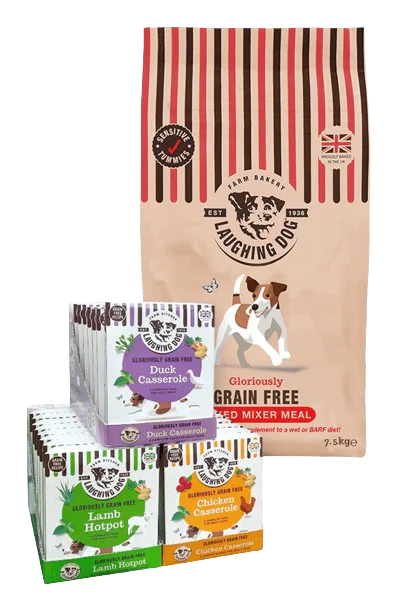
Have you ever wondered what the difference is between wheat free and grain free dog foods? Our nutritionists have put together a little industry insight to help you and your dog on your foody journey… Grain & gluten free dog food vs wheat free dog food At Laughing Dog we are able to produce both wheat free and grain & gluten free dog food ranges. Both are enjoyed by all dogs – not just those with a specific need for wheat or grain free diets. But do you know what the difference is between our grain free dog food and wheat free dog food? With both terms being used frequently in the dog food (and human food!) industry, it can be a confusing area to understand. What is the difference between wheat free and grain gluten free dog foods? Often consumers are not aware that there are other grains to wheat. While wheat free completes and treats are free of wheat gluten, they can still contain alternative grains like barley or oats, which also contain gluten. To be completely grain and gluten free, however, it means that a food must be free from all cereals. For example, no barley, maize, oats, rice or wheat. Our Naturally Complete Grain Free dog food range and grain free treats are therefore free of wheat gluten, gluten and grains. “perfect for dogs with sensitive tummies…” As your grain free dog completes don’t contain cereals, what do they use as the base?Our Naturally Complete Grain Free dog food recipes all use sweet potato as a base, which is an easily digestible source of slow release energy and of course contains no wheat gluten or gluten. It is perfect for dogs with sensitive tummies, those with cereal intolerances and our four-legged friends with a specific need to avoid grains, or purely if you would just prefer to feed your dog a grain free diet. My dog doesn’t need to be on a grain free diet. Are your completes and treats still suitable? Grain free can have really positive effects for dogs who have long suffered from intolerances or adverse reactions due to not eliminating potential causes through feeding. Yet it certainly isn’t just a dog food diet adopted by owners looking to help their dogs’ intestinal issues, but also a diet change and preference for pet parents wanting to completely remove gluten and cereals from their dogs’ diets – just as they may have done with their own eating habits. And our Laughing Dog range of gently oven-baked wheat free and grain free treats (from our Cheesy Bites to Fruity Paws and Sleep Tights) help to protect the natural goodness of their wholesome ingredients! This creates a deliciously tasty and crunchy treat, perfect for helping to keep teeth clean and breath fresh, and even the fussiest of dogs love their baked taste! “our expert nutritionists launched the UK’s first ever baked grain free mixer meal” Is it possible to have a grain and gluten free mixer meal? Absolutely! In fact, our nutritionists launched the first ever oven-baked grain free mixer meal in 2016 – a first for the UK grain free market! This deliciously tasty, oven-baked grain free mixer meal makes for the perfect complementary biscuit to be fed with meat, wet food or as a natural additional to the BARF diet. In this recipe we use a special sweet potato and botanical herb blend. For more information, visit our dedicated Grain Free Mixer Meal page. (**Please note: our Grain Free completes and grain free treats contain no added cereals.) Does Laughing Dog Food stock grain free treats? We certainly! We are very proud of our tasty grain free treat range, offering a healthy salmon based training treat, a calming sleep tight treat and a deliciously minty dental treat…! Check out our YouTube channel below for lots more insight into the natural world of Laughing Dog…!
Learn more